Showing posts with label Squash. Show all posts

3/26/13

Maria Toorpakai: The Pakistani squash star who had to pretend to be a boy


Maria Toorpakai Wazir is a star squash player with a promising international career. Born in Waziristan, a highly conservative region of Pakistan, she had to disguise herself as a boy when she took up the sport - and later received ominous threats for playing in shorts.
"I am a warrior, I was born a warrior, I will die like a warrior."
Maria Toorpakai is courageous - and she's had to be, to play squash in a region where many girls are denied more than a primary education.
When she was four, she put on her brother's clothes, cut her hair and took all her girly clothes outside and had them burnt.
"My father started laughing and said, 'Here we go, we have a Genghis Khan in the family,'" she says, referring to the Mongolian warlord of the 12th Century.

Find out more

Maria playing squash
Maria Toorpakai Wazir was featured on the BBC World Service programme Outlook
As she grew older, Toorpakai was often involved in fights. She says it was how she made friends. "My hands, elbows, knees were always bleeding - my eyebrows and face were always swollen."
So 10 years ago, when she was 12, her father decided to channel her energies towards sport - in particular, weightlifting.
"He was a bit shy to tell people that I was a girl, so he said, 'That's my son and his name is Genghis Khan,'" Toorpakai says.
After a couple of months, she was entered for a boy's tournament - and won.
"Giving her a false boy's name allowed her to take part in whatever games she wanted," says Toorpakai's father, Shamsul Qayyum Wazir.
"Then someone told me that if she carried on weightlifting, she would not grow taller, and she would become plump and heavy. So I encouraged the interest she had already discovered in playing squash."
Maria Toorpakai WazirToorpakai in 2010
Squash is a popular sport in Pakistan and the country has produced many world champions. Women play it too - although not in Waziristan or other highly conservative tribal areas.
Toorpakai says she fell in love with the game the first time she saw people playing it.

Squash in Pakistan

Jansher Khan and Jahangir Khan, 2005
During the second half of the 20th Century, Pakistan dominated the world of squash, beginning with Hasim Khan in the 1950s. His brother, sons, cousin and nephew followed. His cousin's son, Jahangir Khan (pictured, R) was unbeatable in the 1980s, taking six championships and 10 consecutive British Open titles.
Source: The Toronto Star
"I just liked how the kids had so much determination, the beautiful rackets and balls, and the kit," she says.
Her father took her to a squash academy in Peshawar run by the Pakistani air force.
In the first month or two of playing squash, people didn't know she was a girl. When the truth came out, other players started taunting her.
"They used to tease me, use bad language. It was unbearable and disrespectful - extreme bullying."
She didn't give up. She locked herself in the squash court and played for hours, from morning to evening.
"My hands were swollen, bruised and bleeding, but I still kept playing. I locked myself away, trying to create my own shots, my own drills."
The hard work paid off. She won several national junior championships and turned professional in 2006. The following year she received an award from the Pakistani president.

Pakistan's tribal areas

Map
Pakistani forces have struggled to maintain control over the restive tribal regions along the Afghan border, where Taliban-linked militants became firmly entrenched.
In October 2012, Taliban gunmen in the Swat valley shot and seriously injured Malala Yousafzai, a 14-year-old campaigner for girls' rights.
But the extra attention brought trouble to the family.
"In our area, girls are not even allowed to leave their family homes," explains her father.
"They wear a veil all the time and are always accompanied by male family members. When people saw Maria and realised that she did not wear a veil and that she played squash wearing shorts, they were shocked. They said she had brought dishonour to our tribe and they criticised me heavily for it."
A letter was pinned to the window of Wazir's car telling him to stop his daughter from playing squash because it was "un-Islamic and against tribal traditions".
It threatened "dire consequences" if he did not act.
But he maintained that if his daughters wanted to pursue a career in sport, he would support them.
The Pakistani squash federation provided Toorpakai with security, setting up a checkpoint next to her house. Snipers were positioning around the squash court, but she decided things had gone too far.
"A [modern] squash court has so much glass in it, so if there was a bomb blast inside, it would kill so many innocent people," she says.

Jonathon Power

Jonathon Power
  • Won 37 squash tour titles in his career
  • Retired in 2006 when he was world number one
  • One of the most colourful players on the circuit - was described as squash's John McEnroe
Instead she started practising in her room.
"Playing in the hard surface of my room caused me many painful injuries. My father when he saw this spirit in me said, 'If you want to play squash, then the only option you have is to leave the country.'"
So every day, for three and a half years, Toorpakai sent emails to clubs, academies, schools, colleges and universities in the West - everywhere she could find squash courts. By the time she was 18, she had sent thousands.
One of her emails reached Canadian squash legend Jonathon Power. His signature was emblazoned on the first proper squash racket Toorpakai had owned, given to her by the director of the Peshawar squash academy.
Power had recently retired from the professional squash circuit and had set up a squash academy in Toronto.
"It was pretty peculiar," he says.
"I got this email from this young girl, saying where she came from, that she was just trying to pursue her dreams and become the best player she could be."
Maria and her parentsToorpakai and her parents
Power had spent a lot of time playing in Pakistan, and been heavily influenced by Pakistani squash players. But he also knew the difficulties faced by girls and women in the country.
"I just couldn't understand that there was a girl from this part of the world that was a squash player," he says.
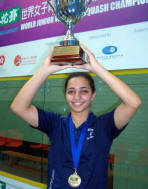
But Power discovered that in 2009 she had come third in the World Junior Women's Championship.
"I thought, 'Wow that's an incredible achievement.' So I thought I had to find a way to help her out."
He replied saying he would like to teach her squash in Canada.
At first, Toorpakai couldn't quite believe he was the real Jonathon Power. Several months later, in 2011, she arrived in Toronto and started training with him.

“Start Quote

Pakistan and the whole Muslim world should be proud of her”
Shamsul Qayyum WazirMaria's father
She is currently Pakistan's top female player and ranked the 49th best woman in the world. Power is convinced that she will go far.
"She absolutely has the talent and determination to become the best player in the world," he says.
"It's going to take time - she did have four years where she didn't get to progress, playing in her room.
"But now she's in a great environment, she's got great people around her helping her physically and learning the game of squash on a tactical level."
As for Toorpakai's father, he couldn't be prouder. "Pakistan and the whole Muslim world should be proud of her," he says.
"In our society people celebrate when a boy is born and they are aggrieved when a girl is born - this attitude must change. I want every tribal girl to have the same chances as other girls."
Toorpakai herself credits squash with giving her the opportunity to live a different life.
"I think people are tired of so much war and fighting and bombs and kidnapping, I think they want peace and they realise now that they need education.
"They are very shy. They need someone to represent them, someone who can raise the voice for them and I think we are the people and we will bring change to them."
Maria Toorpakai Wazir was featured on the BBC World Service programme Outlook. Listen back via BBC iPlayer Radio or browse theOutlook podcast archive.

2/26/13

Squash Star Takes on the Taliban: 'Chosen one' fights for a cause

BY:JAMES MONTAGUE
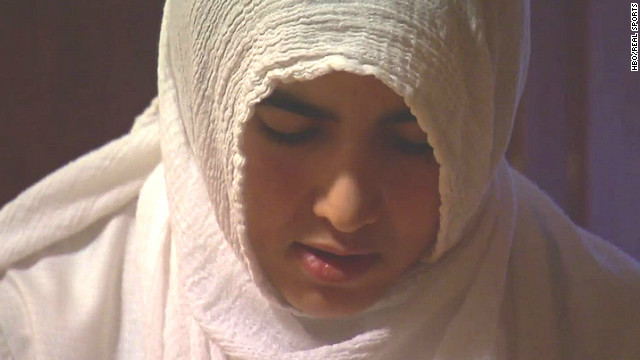
Pakistani squash champion Maria Toor Pakay has been threatened by the Taliban for playing the sport she loves.

STORY HIGHLIGHTS
  • Maria Toor Pakay is Pakistan's No. 1 squash player despite difficult circumstances
  • Pakay fled her native Waziristan after threats from the Taliban, moving to Canada
  • Her father was warned that she was in danger for embarrassing the region's culture and religion
  • Former squash star Jonathan Power is training her to become a world champion
Editor's note: "Real Sports: Pakistan's Maria Toor Pakay," reported by HBO's Mary Carillo, premieres at 2200 ET (0300 GMT) on February 19 on HBO.
(CNN) -- Chingaiz Khan was an unknown quantity when he arrived for a junior weightlifting tournament in South Waziristan nine years ago.
Chaotic and intensely religious, the Pakistani region is known by locals as "the most dangerous place in the world."
The 12-year-old Chingaiz, with his short, jet-black hair and smooth, unblemished skin, looked younger than the other boys. But, despite it being his first ever tournament, he was still stronger than everyone else.

Human to Hero: Nicol David

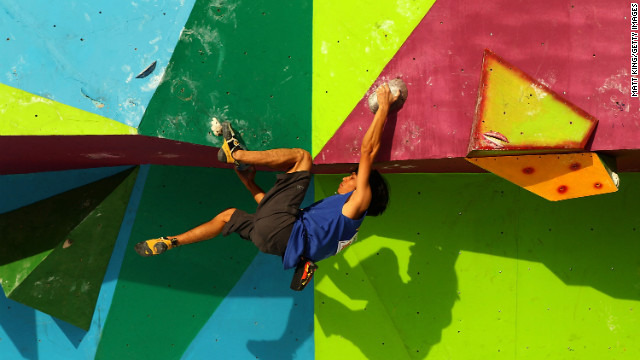
Photos: Shortlisted Olympics sports for 2020Photos: Shortlisted Olympics sports for 2020

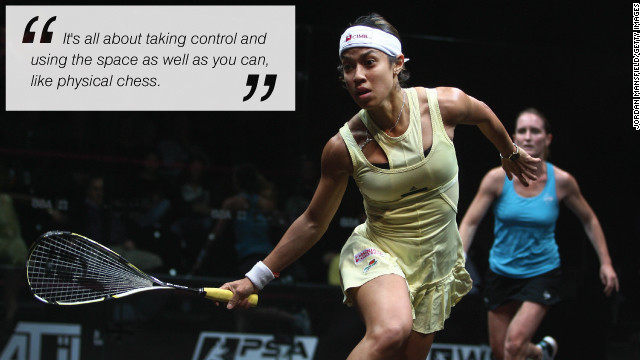
Nicol David: Malaysia's squash icon Nicol David: Malaysia's squash icon

Squash's Olympic bidSquash's Olympic bid
For his father Shams-Ul Wazir, a local college lecturer, the decision to register his son for the tournament paid off handsomely.
Chingaiz was crowned the junior boys' weightlifting champion, the first step on a journey that would take him into the world of professional sport.
Except Chingaiz wasn't really his name.
Chingaiz was actually called Maria Toor Pakay.
Chingaiz was a girl.
"I suggested the name of Chingaiz Khan for her since she had always been like a boy," explained Al Wazir in an 
interview with HBO. "She liked the name very much."
Girls and boys
This isn't a story of deception, but rather a tale of necessity.
Maria Toor Pakay is Pakistan's number one squash player, ranked 49th in the world. She also comes from an ultra conservative region in Pakistan that is home to the Taliban.
Female participation in any form of public life is strongly discouraged, by both words and deeds. Education, working, sports; anything involving women leaving the house unaccompanied by a male relative was seen as the work of the devil.
But Pakay had talent. Her weightlifting triumph gave her access to a world of sporting options that would otherwise have been out of bounds to her as a female, and she discovered the discipline where she would make her name.
Squash is one of Pakistan's most popular games and Pakay excelled at it. By the age of 21 she had gone pro and broken into the world top 50, an incredible rise up the world rankings. She is one of only three Pakistani women in the top 200; by contrast the nation has 15 men in the same strata.

Pakistani FM discusses political turmoil

Pakistan's protest preacher

Officials: Drone killed Taliban commander
Yet her success has come at a price. Pakay and her father have been threatened with retribution by the local Taliban for insulting their culture and their religion.
"My area, my tribal regions are called the hub of terrorism and extremism," said Pakay.
"It's the home to the Taliban, and it's called the most dangerous place in the world. But I have a big vision for my country, and for my people it will be stopped. I always thought that maybe I'm the chosen one."
Standing up
Pakay realized at a young age that she was different to other people she saw in her community.
"When I was four and a half, I told my parents that I want clothes like my brother," she said.
"I want to play with boys, there's more freedom, I felt. And I am not like girls who play with dolls. I want the toy guns and things like that."
Such behavior was anathema to the deeply conservative community she was born into. But her father agreed. Rather than forcing his daughter to conform, he thought about how best to realize his daughter's talent. It was he who came up with the plan to cut his daughter's hair and enter into competitions with the boys.
"They (religious elders) sent me to a mental asylum 'cause they thought that I had deviated from the culture, and that I was crazy supporting women's rights," he recalled.
"They said I was spoiling the whole environment and that all women would want the same rights."

Malala thanks supporters

Pakistan Taliban militant killed

Insurgents create havoc in Afghanistan
With the boys' junior weightlifting title under her belt, Pakay decided to enter a boys' squash tournament. Her disguise was scuppered by bureaucracy.
"My dad said, 'This ... that's my son,' " Pakay recalled of the moment her father presented her to be registered. But the official dropped a bombshell. "He said, 'OK, we need the birth certificate, too.' "
Threat
Shams-Ul Wazir decided to come clean, and entered her in the girls' competitions. She destroyed the opposition and, at the age of 15, was national champion. It was then that the trouble started.
"I found a letter on the windshield of my car. It was signed by the name of 'Taliban,' " her father said.
"They told me -- they threatened me -- 'Stop your girl from playing squash because it is bringing a bad name to our culture and to Islam.' They told me, 'If you do not do this then you will have to suffer very bad consequences.'
"I ignored that threat ... (but) we were very much concerned that she might get shot or she might get kidnapped."
The warning terrified Pakay. Scared for the safety of her family, she decided not play in public.
"I told my dad that I might need a gun. I don't know what to do," she said. "He said, 'It's your decision. I never stopped you from anything. You wanna play or not?'
"Squash is everything for me. And I know that when a girl is kidnapped, it's the biggest dishonor. I'm not gonna bring dishonor for them, ever."
When I was like four and half, I told my parents that I want clothes like my brother
Maria Toor Pakay
So Pakay played in the house, lonely and miserable. From dusk until dawn she hit the ball against the wall with her "Jonathan Power" racket. Her father knew that if he wanted his daughter to realize her potential, she had to leave Pakistan.
"He said, 'Okay, if you wanna play, just leave the country. That's all you can do.' "
The Power of persistence
Pakay agreed. For three long years she would write to everyone. Clubs, players, educational institutions. Nothing. But then, when she was 18 years old, she received her only reply. She recognized the name. It was the same name that graced her first racket: that of former world champion Jonathan Power.
"I couldn't believe that there was a woman squash player from Waziristan, let alone, one that could actually play," said Power of the day he received Pakay's email.
Power retired at the top of his game, as number one in the world. He never left squash. Instead he set up a national academy in his home town of Toronto, looking to find talent in people from places squash rarely reaches. Pakay's letter melted him. It read:
Dear sir,
We were concerned that she might get shot or kidnapped
Shams-Ul Wazir
I'm Maria Toor Pakay Wazir. I belong to South Waziristan agency of Pakistan's tribal areas on the Pak-Afghan border. South Waziristan one of Pakistan's most turbulent tribal agencies and the home to Taliban is also my home. Here girls of my age are passing their lives in such miserable conditions.
They are restricted to four walls despite having the desire to come out of the Stone Age and get assimilated with the rest of the world.
I will be waiting for your positive response.
Regard,
Maria Toor Pakay Wazir, professional squash player.
Power was moved to reply, and soon Pakay was on a flight to Canada.
"It's unbelievable," he said.
"She left on just hope, on a one-way ticket and 200 bucks on an email promise from me."
World champion
The aim for Pakay is to be world champion. She works from morning to night with Power, moving up the rankings as she gets close to realizing her dream.
She left on just hope, on a one-way ticket and 200 bucks on an email promise
Jonathan Power
Being away from her family is tough. She talks to them every day on the internet. She scours the news sites looking for information on suicide bombings and killings, praying they are nowhere near her home. So far, they haven't been.
"The timeline is 'till she's world champion and she goes home with a trophy," Power asserted confidently. "There is no substitute."
Yet in a region where some revile a woman's sporting success, a world championship has extra problems. More publicity, greater exposure, increased danger. That doesn't matter to Pakay. Success could open up opportunities for others like her, playing squash or lifting weights or kicking a soccer ball in their bedrooms as they wait for the world outside to change.
"Someone wants to kill me? Kill me once I bring the change and I become a world champion," she said.
"But not before."

6/11/11

El Weleily Sets Up All-Egyptian Finals In Hurghada

Raneem El Weleily

Omneya Abdel Kawy

PSA/WISPA TOUR EVENT NEWS
RESULTS: Hurghada International, Hurghada, Egypt

Women’s semi-finals:
[4] Raneem El Weleily (EGY) bt [1] Rachael Grinham (AUS) 11-4, 12-10, 11-9 (31m)
[2] Omneya Abdel Kawy (EGY) bt [5] Nour El Tayeb (EGY) 9-11, 15-13, 11-7, 11-7 (49m)


A major upset by Raneem El Weleily in the women's semi-finals of the Hurghada International has set up all-Egyptian finals in the international squash circuit event in the Egyptian Red Sea resort of Hurghada.

El Weleily was facing Australia's three-time champion Rachael Grinham in the WISPA World Tour Silver 20 event celebrating its tenth year in Hurghada.

In a match described by event spokesman Hesham El Attar as "a beautiful tactical battle", fourth seed El Weleily, the world No12 from Alexandria, took just 31 minutes to defeat the top-seeded Queenslander 11-4, 12-10, 11-9. 
Grinham was expected to reach the final for the seventh time – but the El Weleily's second upset over the illustrious former world number one this year takes the 22-year-old Egyptian into her first Hurghada final, and the seventh Tour final of her career.
El Weleily will face national rival Omneya Abdel Kawy, the Egyptian number one bidding for her fourth successive title, beat fast-rising compatriot Nour El Tayeb, the 18-year-old world No18, 9-11, 15-13, 11-7, 11-7.
Abdel Kawy, the world No8 from Cairo, is celebrating her 27th appearance in a WISPA Tour final.