Showing posts with label Bahrain. Show all posts

1/27/13

Arab Women Springing.... into Football Stadiums for Gulf Cup of Nations


BY: SHIREEN AHMED

Bahrain recently hosted the 21st Gulf Cup of Nations. A grand tournament involving eight teams from the Middle East.
The Emirati victors beat the talented Iraqi squad for a 2-1 win. They emerged glorious and jubilant. A nation of fans cheering wildly and supporting them.

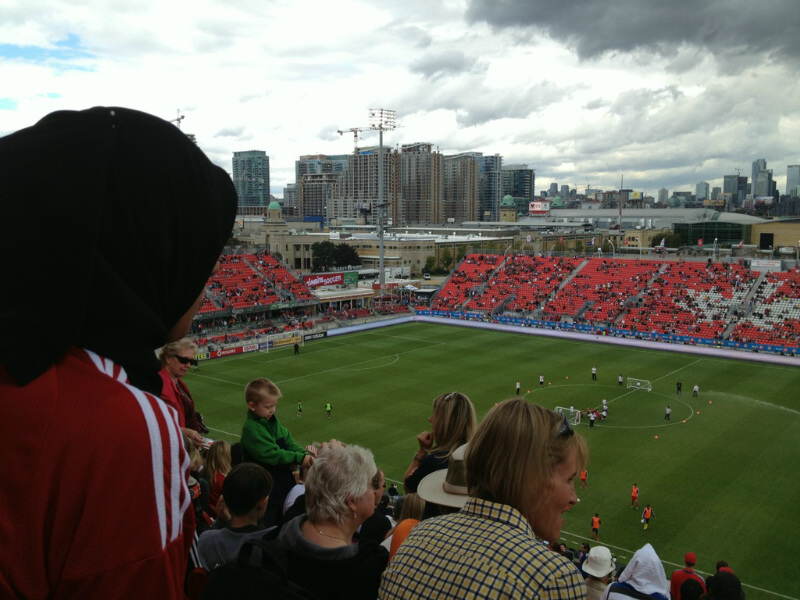
Among those fans were, for the first time, women.
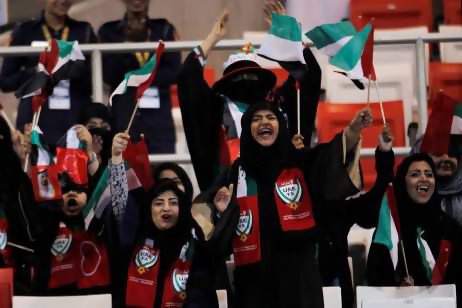

The semi-final match between the UAE team and Bahrain’s home team was one of the first
international matches to host women in a Gulf state.

For reasons cited as safety concerns, male chaperones required as well as years of tradition and inaccessibility, women have not gone to cheer football teams.

But times are changing and no more than in these conservative, Muslim countries.
Women and girls are openly displaying their interest in and allegiance to their national teams.

In the final match between Iraq and UAE, 50 places were arranged on six different flights for women and their chaperones. This initiative was taken on by Nasreen Ali Darwish of the UAE Cycling Federation. She contacted the Emirati Football Association and reserved the places.
There was no hesitation on the part of the Football organization and the supporters flew to Bahrain with their fellow fans.

That women can share in the excitement, moment and joy of an important regional football tournament is unprecedented.

Currently, in the Middle East many stadiums are still considered to be a man’s domain.
In Iran, it is illegal, not just culturally and socially unacceptable, for women to attend football matches or even televised events in public.
This issue isn’t only about cultural inequality or traditional gender roles, it is about national pride: “Sport makes everyone connect as it is a mutual language for everyone," says Dr. Ahmad Alomosh, a Sociologist at University of Sharjah "A victory for a national team is bound to enhance national identity and unite people”.
Dr.Almosh also contends that publicly cheering sports teams represents a “natural progression of Emirati women’s role in society”.
In addition to the legions of female supporters in the Middle East, the are numerous critics of these supporters.
Twitter was ablaze with debate and discussion regarding the “bold” move of many women to travel outside of their country to support a team.

One twitter user stated: “It is sad to see the UAEFA encourages women to unveil and discard their decency under the flag of supportiveness”.
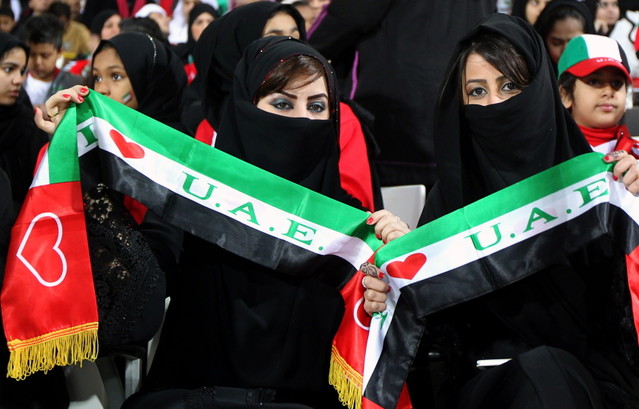

It should be noted that a lot of the women were dressed in long-sleeved t-shirts or long robes with some choosing to wear a headscarf (hijab). It is not required by law in Bahrain.

User @bomoath75 insisted that women at a match would “lose the spirit of modesty and chastity”.
As a footballer, a spirited fan and a woman,  I totally am unclear how chastity can be compromised by waving a flag in the stands.

Interestingly, women are also of this opinion. Twitter user @jumaira_ wrote that this idea was "foreign and alien to what we are used to and will distort the image of our country".

For some the option for women to stay and home and watch the matches is a valid one.
That these female supporters -gasp!- travel outside of the country to a neighouring one is unfathomable. Women engaging in loud cheering, whistling and clapping may be horrifying and what ultra-conservative folks think is the degradation of women’s expected responsible behaviour.
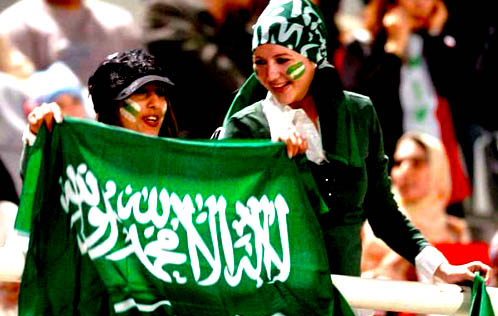

Or it could just be that there is a rise in interest in football among women where there may not have been previously. That girls are not just watching their brothers play but are healthy, active and confidently engaging in sport. That is is the most watched sport in the world and that stadiums are creating family spaces, clean washrooms and controlling amount of hooliganism that occurs is good for all involved.

A safe space for football is a critical one.

Almost one quarter of football matches in some parts of Europe are women. They have the resources and interest to participate in Fantasy Leagues, they attend matches and purchase kits and invest in heavily in team spirit.

Most are cognizant of that privilege - although it ought to be a right. The right to safety, hope and participation. It is widely known that women in some parts of the Middle East can not drive or travel without a male relative. But that they may not be welcome in stadiums to simply watch a game is unfathomable.
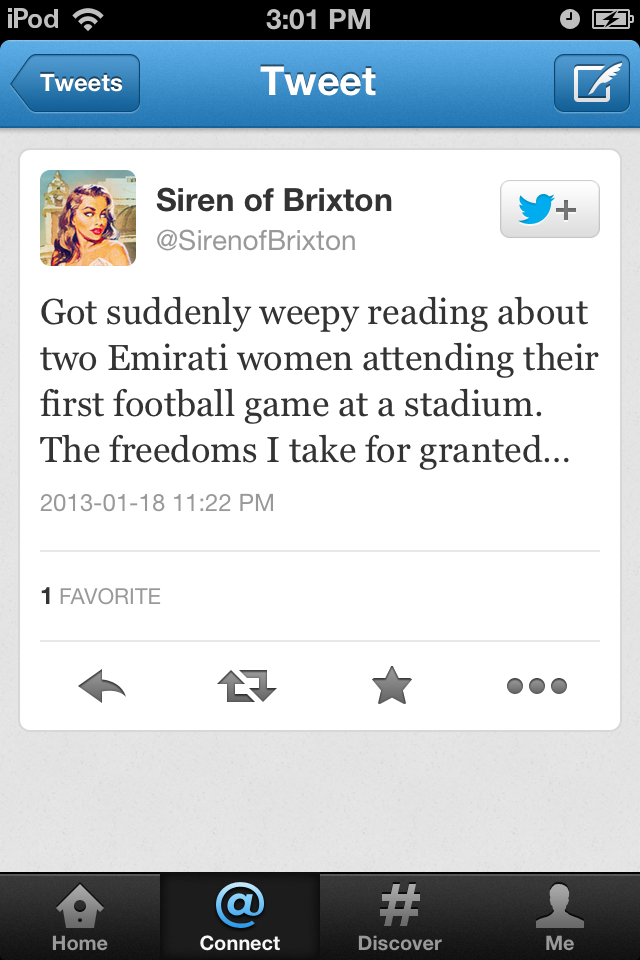


Most recently there had been a picture of a Muslim female fan in Bradford, England that went viral. This picture was important for many reasons. Firstly, it debunked the myth that women in hijab may not care for football. Second, it showed that there is a place for inclusion and ardent team loyalty from women regardless of race, religion.

This is an important parallel to the current issue in the Middle East. Women are making choices. They are working, earning, raising football lovers - both girls and boys- and to partake in football can only strengthen community bonds.

Not to mention that creating lines of sports apparel and merchandise catering to female fans in the Gulf states could be a very, very lucrative initiative. Would be very enticing for clubs to venture into this specialized area.

Women are ferocious and vocal supporters of football clubs. They have been for a long time in various ways. Some pray, some scream, some cheer and all are intense.
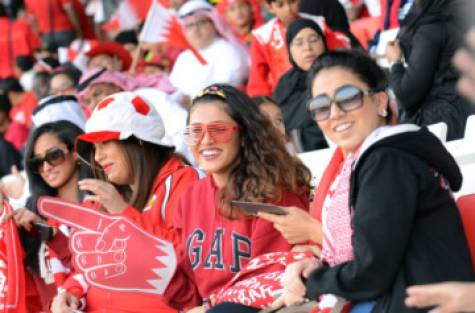


One of the most conservative Muslim countries, Saudi Arabia has begun construction of a new soccer arena in Jeddah that will be able to accommodate families, and female journalists and fans. Previously women were not permitted to attend due to a law barring men and women from mingling in public.

Football is the game of the world. It is not a novel idea that women of all ages and backgrounds would be interested in it. Even those from the Middle East.


Overall, the tone is of triumph, happiness. And women should partake in this joy.

There is a lot of work to be done to solidify systematic equality, safety and opportunity for girls and women in education, workplace and in community.

A football stadium is positive place to keep the momentum going. The road to empowerment of women is a long one; it even runs along the pitch.

I will for one be watching, and cheering and supporting the right to participate of these intrepid women just as I cheer at matches.


12/12/12

Bahrain prepares for 3rd GCC Women's Games

Shaikha Hayat with other Executive Committee members at the meeting.
08 DEC 2012, Manama, Bahrain: The Coordination and Follow-up Committee of the 3rd GCC Women’s Games, to be hosted by Bahrain next March, had its first meeting on Saturday to review the most recent arrangements and other activities. The Executive Committee Chairwoman and Bahrain Olympic Committee member, Shaikha Hayat bint Abdulaziz Al Khalifa, welcomed the committee members. 
Shaikha Hayat noted the support the event has received from the Supreme Council for Youth and Sports Chairman and BOC President Shaikh Nasser bin Hamad Al Khalifa. This support has encouraged Bahraini women to practise different sports, either for competitive or recreational purposes. She also highlighted the role of Her Royal Highness Princess Sabeeka Bint Ibrahim Al Khalifa, wife of His Majesty King Hamad and Supreme Council for Women President, in backing women’s sports activities in the kingdom. Dr. Aysha Al Amer chaired the meeting of the committee, which also has in its membership Fawzia Al Yousefi (Kuwait), Laila Suhail (UAE), Suad Al Ismaili (Oman) and Lulwa Al Marri (Qatar). 
The committee members visited a number of stadiums and sports gyms that will host the Games, and were satisfied with the overall preparations. They were also briefed on the proposed competition timetable, the Games bylaws and the proposed models for medals, certificates and official logo. 
The joint technical meeting with the directors of the GCC delegations is likely to be held in early February. Mohammed Al Zayed was named secretary of the Coordination and Follow-Up Committee, in addition to his duties as a staff member at the BOC International Affairs Department. 
The committee decided to submit their reports and recommendations to the Executive Office of the GCC Women's Sport Organizing Committee for their meeting in Qatar on Thursday. (Source: Rami Ayoob, BOC)
Source: http://en.olympic.cn/news/olympic_news/2012-12-11/2197372.html 

9/2/12

Islamic Reflections on Women’s Sporting Bodies in Relation to Sexuality, Modesty and Privacy

By Sertaç SEHLIKOGLU

During 2012 London Olympics, heated debates arose around the question of Muslim women’s participation to Olympics. Some of these discussions problematized the position of countries which have never sent a female Olympian (Brunei, Saudi Arabia and Qatar), while others discussed under which conditions headscarved (hijabi) Olympians should participate in the games. Although they come from very different ideaological, political, and religious perspectives, all these debates and interventions claimed the right to exercise power on the female body. As an activist blogger on Muslim women’s involvement in sports and a young anthropologist, I have been inquiring issues of women’s agency, desire, and privacy in my field research.  As I have been interviewing Muslim women doing sports in women-only gyms in Istanbul, I have asked them about their views on involvement in sports, privacy, modesty, and public sexuality.

In order to have a better understanding of the debates on Muslim sportswomen, one needs to keep two points in mind: The first one is the Islamic point that sports requires body movements that trouble the perceptions on women’s public visibility and public sexuality. The second point however is linked to a broader question on the boundaries between the masculine and the feminine; which are perceived to be physically yet discursively trespassed by professional sportswomen, who are therefore considered as troubling subjects.
The literature on sports and gender also emphasizes that women face higher levels of constraints than men regarding involvement in leisure and sports both in Western and in Muslim contexts (Shaw 1994, 1996; Henderson and Bialeschki 1993). While several scholars bring forward the original teachings of Islam which actually favor and advocate physical development sports for both sexes (Mahfoud 2008, Pfitzer 2008), several others criticize the ways in which Muslim women’s involvement in sports are overshadowed and restricted by hegemonic masculine discourses (Di-Capua 2006). Among those discussions, I am interested in whether and how Muslim women have developed strategies to increase and legitimize their involvement in sports both in the Muslim and non-Muslim and/or secular world.

MUSLIM WOMEN AND SPORTS: A CONTESTED AREA

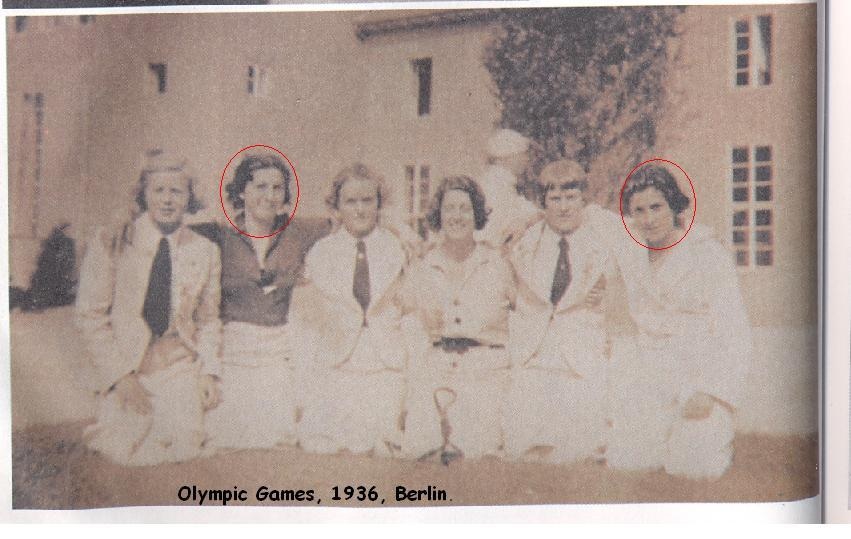
Two female participants of Olympics from Turkey with other fencers, 1936. Image courtesy Sertac Sehlikoglu
We can group Muslim sportswomen into three based on their participation in international games. The first group of women is composed of those who are not following the Islamic dress code, some of whom do not believe that such dress code (ie, headscarf) is Islamic. Historically, this group has been involved in international games for much longer than the other two, since modernists in many Muslim societies viewed sports as a means of breaking women’s segregation and including them in public life in the early 20th century. The first Muslim women attended the 1936 Berlin Olympics: Suat Aşeni and Halet Çambel represented Turkey in fencing, 36 years after first women were allowed to compete in the Olympic Games. Turkey, as a country which accepts international dress regulations for different branches of sports, does not have any problem in sending its successful sportswomen to the Olympic Games, as long as the sportswomen follow the international dress codes in sports.
The second group of Muslim women is composed of those who believe in modesty and prefer observing Islam in terms of the dress code as well. These women often face other rules, such as those in international games, which forbid their headscarf based on safety and security concerns. Muslim sports activists propose “safe hijabs” to negotiate with security concerns and suggest alternative styles for different branches. FIFA, for instance, was in contact with designers for an approvable headgear to be used in international soccer games when this article was being written.
A third group of Muslim women however, are not allowed to participate in sports, not because of their religious choices or international game regulations, but because of the regulations of their own country. Iranian sportswomen are an example to this, since the branches of sports Iranian women are allowed to participate are limited: Lida Fariman, Manije Kazemi (archery), Marjan Kalhor (skiing), and Sara Khoshjamal Fekri (taekwondo) are four examples, who have represented Iran in the Olympic games in earlier years within clothes regulated by their country. In these Iranian cases, the dress codes of the sport are in line with Iran’s national dress code for modesty to be preserved. Similarly, and unfortunately, there are countries, such as the Southeast Asian nation of Brunei, Saudi Arabia and Qatar, which have not sent any single woman to the Olympic games until 2012. Such outfit regulations influence female citizens of these countries whether the sportwomen themselves are Muslims or not, since they are bounded with the codes both at national and at international level.
What all these groups of Muslim women seem to be sharing is that their bodies are at the center of heated ideological, political, or religious debates and contestations at national and international platforms; as these women are subjected to different forms of idealized discourses and pressures (of secularist and Islamist patriarchies) on multiple fronts.
The fatwas regarding sports are very explanatory in understanding the “Islamic” attitudes. Although Islamic rules do not necessarily pose an obstacle to the participation of women in sports, they can shape the sporting experience of women as gendered subjects. All of the fatwas on Islamic web sites concerning physical exercise begin with the importance of sports for health and encourage individuals to be physically active with reference to hadiths, with minor warnings on violence, fanaticism, or hooliganism. When it comes to women’s involvement in sports, the fatwas start using a more regulative language in details. Almost all of the suggested regulations and rules about women’s involvement in sports are related to gender segregation, and, more importantly, bodily exposure. Fatwas specify several rules that must be followed:  First, men and women must be segregated, since mixed environments may open channels for seduction, temptation and corruption. Fatwas reject any physical exercise that stir sexual urge or encourage moral perversion such as women practicing dancing and being watched by the public since each one of the these acts are coded as “sexual(ly appealing).” Indeed, those within Saudi Arabia who oppose the inclusion of women in sports do so because future implications and consequences of women’s involvement in sports might be un-Islamic although there is nothing in Islam that prohibits women from physical activity or even competitive sports.
Most of the time, the most convenient sport for Muslim sportswomen who have concerns about their body movements or Islamic veiling are the branches that do not require too much body movements – the movements which are perceived as ‘sexually appealing’ such as movement of hips (running) and breasts (jumping). The most popular sports for women from predominantly Muslim countries have been athletics, power lifting, fencing, archery, martial arts and table tennis. Such branches are more convenient especially if women are professionals and need to spend hours everyday for training. Women can easily find spaces for training and do not need to seek for special dedicated spaces.

WHAT IS THE BORDER OF VEIL, SEXUALITY AND SPORTS?

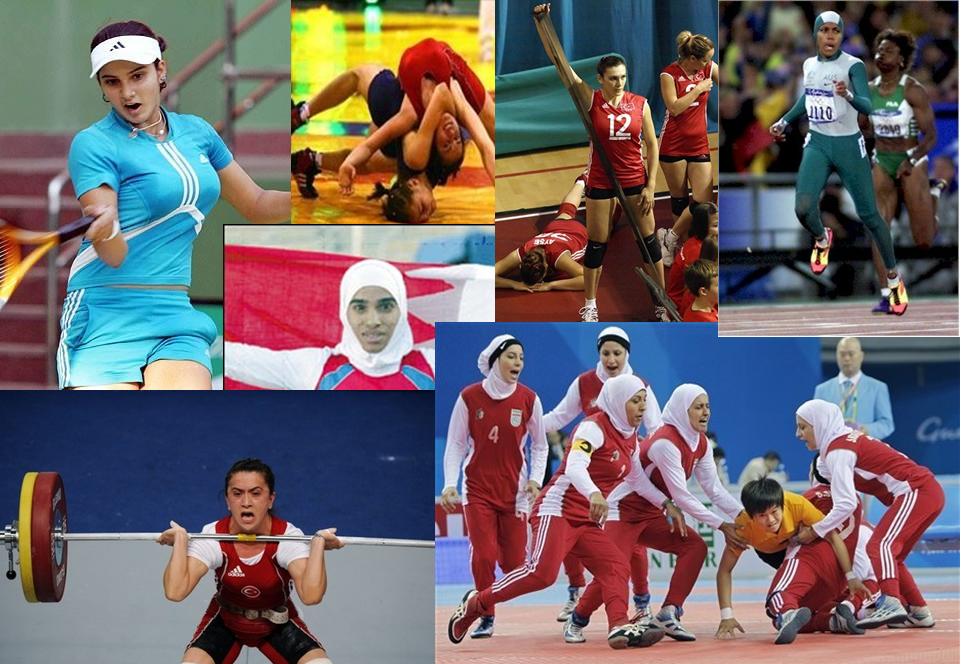
Set of photos shown to informants and asked what they think. Image courtesy Sertac Sehlikoglu
The Islamic veiling, whether in the format of a simple headscarf or in more sophisticated outfits, does have a spiritual value for Muslim women as they cover their bodies during prayer. Such a value is too important to underestimate. Yet, the borders of a veiled body also stay on the edge of the gender binary of modern Islamic heterosexual norms. As apparent in the fatwas, less veiled body of a Muslim woman arouses hyper-femininity yet reflects homoerotic boundaries of women in Islamic cultures. However, the body of a Muslim sportswoman is troubling not only because it is sexually arousing as a female body, but also because it trespasses into the masculine zone.
During my field research on women-only gyms in Istanbul, I interviewed 40 women on their involvement in physical exercise and how their involvement is shaped or constrained by people closest to them at home or at work. These women prefer such homosocial spaces simply because they do not feel “comfortable”, as they put it, when they can be seen by men. I showed my informants, who were sporty but not involved in any professional sports, photos of various Muslim sportswomen taken during international games. They were all familiar with physical exercise and accepted Islamic gender norms at one level, therefore preferred homosocial spaces to exercise. The photos women were shown included Sania Mirza (Indian tennis player, non-veiled), Roqaya Al-Gassra (Bahraini Athlete, veiled), female wrestlers, volleyball players, and weightlifters. Amongst all, Al-Gassra aroused the most mixed feelings amongst women. Women did not feel comfortable about Al-Gassra’s look since she “looked like a guy” and she was revealing her body although she was covering her head. On the other hand, most of my veiled informants were proud to see a ‘veiled’ (not a Muslim but veiled) woman in international games but they still found it unnecessary. The Olympics and international games therefore, raise the debate on the ways in which a woman’s body is exposed to international audiences which is linked to complex feelings on national pride (and how this sense of pride and nation is perceived), women’s public sexuality, modesty and Islamic pride (which also takes gendered forms).  Indeed, Al-Gassra, as a professional veiled athlete, was becoming part of such Islamic pride and become target of criticisms for two reasons: for her low-veiling and tomboy look. Thus, Islamic pride of a woman is expected to be both normative and modest; both of which are violated in the case of Al-Gassra.

8/11/12

Olympic Glories Came From Turkey and Bahrain

LONDON: Asli Cakir Alptekin led a shock 1-2 for Turkey by winning the gold medal in 4:10:23, handing her country a first-ever gold medal in track and field, in women's 1,500m final at the Olympic Stadium.
Bulut, who also took European silver behind Alptekin in Helsinki and has improved her time in the event by almost 15 seconds this season, took silver in 4:10.40.
With a bronze medal, Maryam Yusuf Jamal last night gave Bahrain its first Olympics medal.
Maryam claimed the bronze a further 0.34 of a second adrift.

Source: http://www.gulf-daily-news.com/NewsDetails.aspx?storyid=335713

8/4/12

Azza al-Qassimi to hoist the Kingdom's flag during the inauguration of the London Olympics 2012

London: July 26 -- (BNA) Bahraini excellent shooter, Azza al-Qassimi,is set tomorrow set to experience an epoch-making event which constitutes a landmark in her sporting career as she has been accorded the honor of hoisting the Kingdom of Bahrain's flag during the inaugural ceremony of the London Olympics 2012.
The Bahraini Olympics Committee had selected Azza al-Qassimi in order that she hoists the Kingdom's flag during the London Olympics 2012 inauguration ceremony on behalf of the Arab and GCC sports arena because she has had accomplishment during various regional championships the most recent of which was the Twelfth Arabian Games in Doha late last year. (IY) 

7/28/12

Waving Hijab? Nah! Waving Flag!

Today was the 2012 Olympic Games Opening Ceremonies. The Parade of Nations has always been my favourite part as it humanizes the Olympics and lets us see the different teams express their excitement. Dreams will be realized and hopes will be crushed. It is also where inspiration and awe will burst out.
The Parade of Nations is about the athletes. It’s about respecting their communities and uniting people under the umbrella of Fair Play and Love of Sport. To carry the flag ahead of a country is an undeniable honour.
I was quite excited to see so many strong, talented women lead the charge into the stadium.
More thrilling was, how many predominantly Muslim countries (12 in fact: Tajikistan,Qatar, Morocco, Indonesia, Turkey, Jordan , Iraq, Djibouti , Comoros , Brunei , Bahrain , Albania ) had selected women as flag bearers.
These phenomenal athletes must fight through the physical rigors their chosen sport. They must train, focus, balance home life, studies, work, family and community involvement. Some must undoubtedly navigate through a system of discrimination with a lack of understanding and support.
I’m a footballer. I wear hijab and openly identify as a Muslim. But, I live in a country where my participation in open sport is allowed and fostered. No doubt, I am privileged.
Flag bearer Mavzuna Chorieva from Tajikistan, had to enter competitions using her brother’s identification and cutting her hair short because a female boxer was unheard of. She hid her identity to have access to a sport she loved.
Maziah Hussain of Brunei, is the first hijab-wearing athlete to represent her country. So is Bahia Al-Hamad of Qatar. Both women beamed with pride as they led their countrymen through the parade. In fact, they are of the first women to be allowed to participate from their homelands.
To see these women carrying their flag with so much grace and dignity is enough to make any women’s heart burst with joy.
Muslim countries represented at these games have historically faced much scrutiny. Their male vis-à-vis female team ratios may have been quite low. They have always been critiqued for lack of inclusion of women and rightfully so. They may also be from a region currently embroiled in war, political insecurity, poverty and ingrained systems of patriarchy .
Saudi Arabia is sending two women as part of their National Team. It has been getting a tremendous amount of press as the announcement was made very recently.
From a country where women can not yet drive, a young woman , Wojdan Shaherkani, will represent her nation in Judo- if she is allowed to compete with her hijab.
However, the issue in this case isn’t whether the athletes wear hijab or even practice Islam. It is that these women they are strong enough and talented enough to make an Olympic Team. Representing Muslim nations that adhere strictly to tradition and may not always be open to women participating so openly is a huge step and one that deserves recognition. These athletes are shattering assumptions and are demanding to give their best.
It is an honour to watch
That 12 women have been selected to be at the forefront of the world’s most watched sporting event, is unprecedented. They are being recognized for their athletic achievements and potential while their heritage is celebrated. It illustrates that the world can be a place of encouragement, acceptance and inspiration.
And it has room for brilliant athletes, Muslim women included.
This is a virtue that I cling to and hope that my daughter and her daughters will defend.
As these athletes are showcased globally, Muslim women flag-bearers, are blazing trails and sprinting in the right direction – to the podium.
Source: http://footybedsheets.tumblr.com/post/28184241618/waving-hijab-nah-waving-flag

Commissioned by Qatar Museums Authority, Hey’Ya: Arab Women in Sport, the first exhibition in London by the internationally renowned photographer Brigitte Lacombe with the documentary maker Marian Lacombe, opened on July 24, 2012 at Sotheby’s Gallery in London in the presence of QMA’s Chief Executive Officer Mansoor Al Khater. The exhibition will stay on view until 11 August 2012 in conjunction with the XXX Olympiad in London.
The exhibition features a brand new series of large-scale photographs by Brigitte Lacombe of more than 50 Arab sportswomen, from beginners to Olympians, from 20 different Arab countries, shown alongside videos by her sister, Marian Lacombe, which situate the images within the women’s personal histories and a wider – often unspoken – discourse of gender, culture and sport in the Arab world.
The exhibition was conceived by the Qatar Museums Authority, combining its long-standing commitment to commissioning and showing the work of internationally renowned artists with the wider goal of the country to drive forward Qatar’s aim of educating and sparking debate about sport, and of persuading more girls to find a way to participate. Commenting on the importance of this exhibition, QMA CEO Mansoor Al Khater said: “This exhibition is a reflection of our belief in the power of culture in breaking down social barriers and building bridges between people of all nations and backgrounds. QMA is committed to enlarging the cultural debate and creating a platform for the voice of Qatar.”

The project, shot over a period of seven months, began in December 2011, in the Athletes Village at the Arab Games in Doha, where Brigitte and Marian Lacombe set up a specially created outdoor studio, working side by side. Thereafter they travelled working with women athletes of all ages and levels of achievement in countries from the Arabian Gulf to North Africa. With the support of Qatar’s Aspire programme, which promotes sporting opportunities for young people, they also worked with the talented younger generation of sporting hopefuls. 
Award-winning French photographer Brigitte Lacombe lives in New York City. Over the last thirty years, she has worked extensively on assignments in magazines, the theatre and film. The long list of legendary directors she has worked with include Steven Spielberg, Martin Scorsese, Mike Nichols, Sam Mendes, Michael Haneke, David Mamet, Quentin Tarantino, Spike Jonze, and since 1983 she has worked on all David Mamet’s productions. Her work has been extensively published including two monographs (2001 and 2009). Since 2009, she has been working on an ongoing project for the Doha Film Institute and the Doha Tribeca Film Festival in Qatar. Entitled, I am Film, this is a collection of portraits of international filmmaker and actors, with an emphasis on filmmakers from the Middle East region. 

Marian Lacombe works as an independent documentary film-maker, following 20 years as a reporter, anchorwoman and editor-in-chief on daily news and magazines for the French tv channel M6 in Paris. She has directed documentaries on filmmakers, choreographers and designers such as Robert Altman, Philippe Decouflé and Christian Lacroix. Since 2010, she has been working with Brigitte Lacombe for the Doha Film Institute photographic project I am Film. She also travels around the world filming and working on travel assignments for Condé Nast Traveler Magazine.

QMA Gallery at the Cultural Village, Katara, will play host to the Hey’Ya: Arab Women in Sport exhibition in February 2013. An extensive educational program will complement this exhibition aiming to engage visitors. Hey’Ya, the title of the exhibition is an Arabic expression meaning Let’s Go.
Photo credits:
Photo #1: Artist Brigitte Lacombe
Photo #2: QMA CEO Mansoor Al-Khater
Photo #3: From right to left- Khalid Al-Mansouri - Qatar Ambassador to the UK, Julia Peyton Jones - Serpentine Gallery, H.E. Sheikh Saoud Bin Abdulrahman Al-Thani - Secretary General of Qatar Olympic Committee, Brigitte Lacombe - Artist, Robin Woodhead - Chairman Sotheby's and Mansoor Al-Khater - Qatar Museums Authority CEO.

7/27/12

FEMALE MUSLIM OLYMPIANS SCHEDULE

Muslim Women's Sport Foundation prepared the schedule below for your interest. For the better quality of the schedule, please refer to their website from: http://www.mwsf.org.uk/olympics_london2012.html


(Every effort has been made to ensure the information is correct. If errors are noticed please email info@mwsf.org.uk. For the full Olympic schedule  visit www.london2012.com)

5/24/11

Better than Beckham in Iran

By Elisabeth Braw, Metro World News
Honey Thaljieh loves watching international football from her home in Bethlehem. Soon Thaljieh herself might play on global television: she’s the founder of Palestine’s new national women’s team.
“In the beginning it was very difficult”, recalls Thaljieh, 26, who also founded the West Bank’s first female football team seven years ago. “People said it wasn’t a game for women. Some said it wasn’t feminine, and others thought men would look at us in our t-shirts.” Today, Palestine has no less than 16 female outdoor teams and 10 indoor teams.
Bedre end Beckham i Iran
Photo by Honey Thaljieh
Welcome to the Revolution. “During the past 5-10 years, we’ve witnessed success stories in the Muslim world”, explains Sertaç Sehlikoglu, a Turkish PhD student in Social Anthropolicy at Cambridge University who runs the blog Muslimwomeninsports. “Love of sport seems to be female athletes’ primary motivation. They also want to gain physical strength and become fit. Many of them are interested in sports for self-defense purposes, which they hope will provide them a higher self-esteem.” 
Today nine Middle Eastern countries, including the UAE, Qatar and Iran, have women’s football or futsal (indoor football) leagues.  “People used to think that football was a strange European thing”, says Farrah Sheikh, a 19-year-old who plays in Dubai’s women’s league. “I had to get special permission to play football in school. Now people are getting used to us playing, though at my university the women’s team is only allowed to play indoors, while the men have two outdoor fields.” Last year Bahrain hosted the world’s first Women's Football Cup Arabia.
“Football is quite popular among Middle Eastern women”, notes Sehlikoglu. “So are martial arts, swimming and track & field.” In 2006 Bahrain’s Roqaya Al-Gassra, who competes fully covered, won the 200 meter race at the Asian Games. And Iran’s Sara Khoshjamal Fekri won bronze in taekwondo at last year’s Asian Games. 
Honey Thaljieh sets her aim on the 2016 Olympics. “Of course we’re not as good as the other Arab countries, because we don’t have good facilities to practice in”, she says. “I want to improve women’s chances of doing sports in Palestine.” But she has another goal, too: “People think of us Palestinians as terrorists. I want to show them that we’re peaceful and well-educated.”


Macho Mideast women
This spring Turkey’s Nurcan Taylan won three gold medals at the European Weightlifting Championships. Turkey, which along with Iran boots the most female athletes, has a “bootcamp” for young female wrestlers. Bahrain and Palestine, too, actively promote female sports, though women point out that male athletes still receive more money. “There were over fifty females athletes from the Middle East in the last Paralympics in China Beijing”, notes Sertaç Sehlikoglu. “We can certainly expect more women from the Middle East in the 2012 Olympics. Especially since the female athletes’ success in the South Asian Games last year, several Middle Eastern countries have realized that women’s success is valuable for their country.”
..and now for the headscarves
Iran’s football association is on the warpath with FIFA, which bans female players from wearing headscarves. Other women wearing hijabs have indeed been banned from competing in international events. (The Middle East’s top female athlete, Ghada Shouaa, is Christian.) But women’s success has created a new market: athletic gear for Muslim women. Montreal designer Elham Seyed Javad has created a “sports jihab”, while another company sells body-covering gear for competitive female swimmers. The United Arab Emirates even features an ‘Aspire4Sport’ conference about athletic clothing for Muslim women. 
Analysis: Ghada Shouaa, heptathlete, Syria’s only Olympic champion (Atlanta 1996)

I left school at 16 and moved to Damascus with the goal of becoming a top athlete. Of course I’m happy that Arab women see me as a role model, but to get top athletes we need a big effort, starting with sports academies for young athletes. But Arab countries don’t have the patience to wait for 10-12 years until their efforts bear fruit.
Arab women have been good at martial arts for a long time, but their new football enthusiasm has been a surprise to me. Of course, to get really good, we need a bigger effort there, too. Men laugh at women’s team. Instead they should support them.
I’m proud that I was the first Arab woman to win an Olympic gold, but the Arab world hasn’t utilized this victory. That makes me sad. People say “oh yes, we’re proud”, but they don’t use it to build up sports in their countries.
Of course I hope women’s sports will take off in the Arab world, but sometimes I doubt it. Arabic sports media, like al-Jazeera Sports, use European men, not Arab women, to comment on women’s sports. If it remains like that, women’s sports won’t have a future in the Middle East. But as a woman, I’ll fight for it!
Available in:

11/2/10

Bahrain women clinch third spot - By Rami Hulayyel, on Oct 28

BAHRAIN hammered Palestine 5-1 yesterday to secure the bronze medal in the Women's Football Cup Arabia 2010.
The home side dominated the show in the consolation match for third place, held at the National Stadium in Riffa.
Bahrain's goals included a brace from Manar Yaqoob while Reem Al Hashimi, Marwa Al Majjri and Shaikha Al Anood Al Khalifa fired one each.
It took the hosts just 11 minutes to threaten the Palestinians. Shaikha Al Anood almost put the ball into the back of the net, but her shot went wide.
Four minutes later, Bahrain came close to being awarded a penalty when Al Hashmi was brought down the 18-yard box. But Lebanese referee Hoda El Awadi waved play on.
Bahrain didn't wait too long for their first goal, which came in the 22nd minute. Palestine's fullback Hamama Jorban handled the ball deliberately inside the area and the referee this time showed no hesitation in awarding Bahrain a penalty. It was successfully taken by Al Hashmi who sent Palestinian goalkeeper and skipper Jaklin Jazrawi to the wrong side.
Bahrain, who have a better Asian ranking of 15 compared to Palestine's 21, continued to rule the proceedings with Shaikha Al Anood, Al Hashmi and Muna Al Dayysi making a string of inroads.
But hundreds of supporters waited till the 49th minute to see Bahrain double their advantage with Yaqoob scoring her first goal in the game. The tall defender bounced on a free-kick by Bahrain captain Yasmine Fayez which came off the bar.
Bahrain put the scores beyond reach scoring the third goal 10 minutes later when Yaqoob used her shoulder to secure her double off Al Hashmi's corner-kick.
It could have been 4-0 in the 72nd minute, but Al Daaysi's goal was disallowed for offside.
The Bahraini girls continued to press forward and hit the fourth in the 80th minute through Al Majry who punished the goalkeeper's wrong judgement to chip the ball into the back of the net.
Then it was Shaikha Al Anood's turn to complete the rout, scoring Bahrain's fifth goal, and her seventh goal in the tournament, with six minutes remaining after a neat pass from Al Hashmi.
Palestine had very little chances in front of the Bahrain goal, well-guarded by Shaikha Nouf bint Khalid Al Khalifa.
But the visitors had something to salvage in the last minute of the game when they capitalised on a penalty kick, which was well taken by Natalie Shaheen.
In today's final, Egypt and Jordan will clash for the trophy and the gold medal. The match, which begins at 6pm, will be held under the patronage of Princess Sabika bint Ebrahim Al Khalifa, the Women's Supreme Council chairwoman.

Jordan clinch soccer crown - By Rami Hulayye

JORDAN edged past Egypt 1-0 last night to win the gold medal in the Women's Football Cup Arabia 2010.
In an exciting final, held at the National Stadium in Riffa, Stephanie Mazen fired the all-important goal which gave Jordan an exclusive training camp in Germany in the run-up to the 2011 Women's World Cup.
Playing in front of thousands of cheering supporters, both teams headed into the tournament's final seeking the prestigious trophy.
The Jordanians, coached by Maher Abu Hantash, were looking to avenge their 0-1 defeat to the Egyptians in the last match of Group 'B' earlier in the tournament which saw their side finish second in the group.
It was the Egyptians who started the match on a high note as they dominated the proceedings, thanks to some outstanding teamwork led by their midfielder Engy Ahmed.
Skipper Ahmed was back in the Egyptian squad after serving a one-match ban, missing her team's semi-final match against Palestine which ended for Egypt 4-0.
Egypt's coach Ahmed Kamaleldin started the game with only one striker, Nesma Atef Ibrahim, who was supported by talented attacking midfielders Fadwa Ibrahim, Ingy Hussain, Yasmine Samir and Fayza Elnady.
But the Egyptians faced a solid defence from the opposition, marshalled by Farah Yahya and behind her the goalkeeper and skipper Mis'da Naseem who brought off several fine saves.
The Jordanians came back roaring in the second half and their efforts proved more dangerous with Shahnaz Yaseen, the tournament's fastest player, making most of the team's inroads.
Yaseen's first threatening move came in the eighth minute, but her shot went past the post.
The Jordanian midfielder again made another serious effort in the 29th minute when she used her high pace to evade the Egyptian defence on the right flank, only to see her finish denied by goalkeeper Fawkia Amri.
Mazen then nearly gave Jordan the lead just before half time when she finished off a solo effort on the far left corner with a powerful shot which was bravely foiled by goalkeeper Amri.
The game continued to be a neck-and-neck affair and with nine minutes remaining, Mazen explored her skills with a flying kick from the edge of the box which went into the roof of the net, much to the joy of the Jordanian players, officials and fans.
With just a few minutes left, Egypt pressed forward seeking a late equaliser, but all their efforts were denied by the Jordanian defence.
The final was held under the patronage of Princess Sabika bint Ebrahim Al Khalifa, the Women's Supreme Council chairwoman, who delegated Shaikha Hussa bint Khalifa Al Khalifa.
Shaikha Hussa, who honoured the top three teams at the awarding ceremony, congratulated the winners and wished others success in future championships.
Source: http://www.gulf-daily-news.com/NewsDetails.aspx?storyid=290386

Jordan shatter Bahrain hopes - By Rami Hulayyel

BAHRAIN's bid to win the first-ever Women's Football Cup Arabia 2010 was foiled last night following a heavy 0-3 defeat to Jordan.
In the first semi-final of this regional competition, which took place at the National Stadium in Riffa, the tournament's top team Jordan ended Bahrain's impressive run with Enshirah Ibrahim, Farah Emad and Stephanie Mazen firing one goal apiece for the victors.
In the final, scheduled for Thursday, Jordan will take on Egypt who outplayed Palestine 4-0 later yesterday.
Egypt were without skipper and the team's top player Engy Ahmed who served a one-match ban after collecting her second yellow card in the tournament during her team's match against Jordan in the concluding game of the first round.
However, the Egyptians showed strength and experience in last night's match to emerge winners thanks to goals from Fawzia Eid (1st minute), Nesma Fekry (13th), captain Fayza Hidar (30th) and Ayat Mortada (90th).
The tournament's final, to be followed by the prize-giving ceremony, will be held under the patronage of Princess Sabika bint Ebrahim Al Khalifa, the Women's Supreme Council chairwoman.
Semi-final losers Bahrain and Palestine will face off tomorrow in a consolation match, starting at 5.30pm, for the third place.
The winners of the tournament will benefit from exclusive training in Germany in the run-up to the 2011 Women's World Cup.
The Bahrainis headed into yesterday's semi-final with confidence, following an outstanding show in the first round which saw them win first place in Group 'A' which also featured Palestine, Syria and Qatar.
Bahrain's coach Khalid Al Harban was heavily relying on his star midfielder Shaikha Al Anood Al Khalifa, who scored eight goals for the team during the first round.
However, the home side faced a tough challenge from their opponents, who proved the stronger side yesterday with excellent teamwork, accurate passing and good pace.
The Jordanian girls took advantage of an 11th-minute lapse by the Bahraini defence to take the lead through Enshirah.
Al Anood then led a series of inroads but her efforts missed final touch. Other brave individual attempts by Bahrain players Reem Al Hashmi, Marwa Mohammed, Yasmeen Fayez and 18-year-old striker Muna Al Daaysi were also thwarted by the Jordanians.
The hosts' comeback bid suffered a major blow in the 31st minute when they conceded a second goal through Emad's spectacular free-kick which deceived the Bahraini defence and goalkeeper Huda Ali Salman.
Jordan could have scored the third on 60 minutes but Shahnaz Yaseen, the player of the match, saw her brilliant effort denied by the bar.
But the Jordanians did find the back of the net six minutes later when Mazen's free-kick was accidently deflected by Bahrain defender Noora Abdulaziz into her team's net.