Showing posts with label Human Rights. Show all posts

1/2/13

Fearless and Female: Cox's Bazaar Best Surfer

BY: SHIREEN AHMED
“I feel free on the water...where I am from and who I am doesn’t really matter”.- Nassima Atker

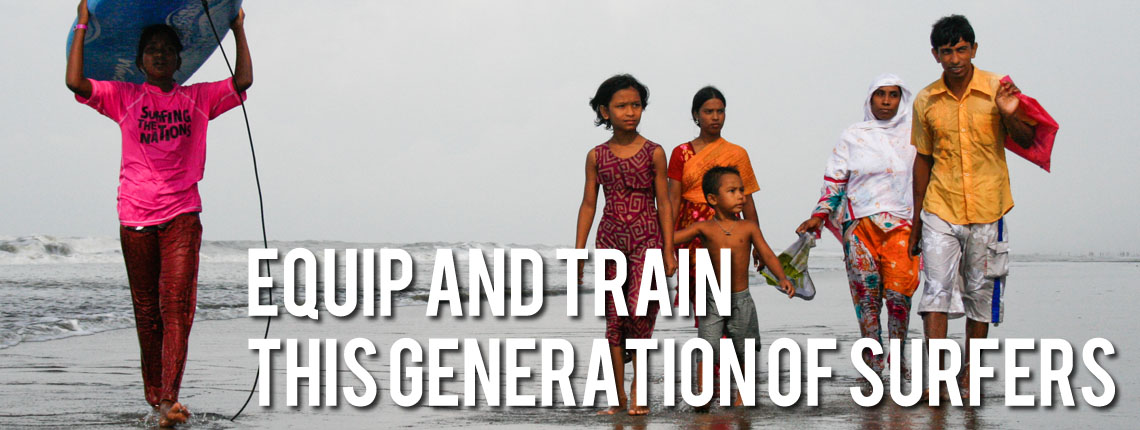
Cox’s Bazaar, in the southeast corner of Bangladesh, is a perfect spot for surfing. In the early nineties a local resident, Jafar Alam, set up a surf school and promised to teach kids and passer-by how to surf. He was supported and encouraged by a group of Americans who had stopped to surf in Bangladesh. Alam’s surf school: Surfing Bangladesh now has more than 70 participants. One of whom is Nassima Atker, a Rohingya refugee from Burma. Atker moved to Bangladesh with her family to escape persecution, sectarian violence and ethnic cleansing.
According to the United Nations the Muslims of Rohingya are one of the most persecuted minorities in the world. There are more than 200,000 refugees in Bangladesh who are struggling to live in squalor. 40,000 of them are undocumented.  Due to a recent NGO ban in the area, these people are not provided with any type of assistance. They are resented by Bangladesh who insist they are illegal migrants although the Burmese government denies they are Burmese. Since the 8th century their historical and natural ties to land are mostly from Arakan in Burma.
No one is willing to accept or embrace them.

Essentially, they are a people without a home. Rohingya’ are denied citizenship and victims of institutionalized discrimination. They look similar to Bangladeshis and speak a different language and are of a different religion but essentially they are from Burma.
In addition to being a displaced and vulnerable population, the women struggle with poverty, illiteracy, lack of access to health care and are often forced into sexual and forced labour.
One woman is facing insurmountable struggles, not only culturally and socio-economically; she is one of Bangladesh’s most agile and skilled surfers and receiving very little encouragement.
And she is labelled a “whore” for wanting to surf.
Obviously, in a region where survival is a basic challenge, surfing and participating in beach activities are not viewed upon favourably. Or a priority.
Nassima, is the only woman actively surfing. But she is not supported by her neighbours and community.
Her Muslim culture is very conservative and although there are organizations who were established to empower youth and teach them surfing, she is facing more and more opposition to her athleticism.
She recalls her first experience on the water was challenging but that she felt a connection to the ocean and keep practicing.
Nassima wears a salwar kameez- full shirt and loose pants- as her surfing kit. She is already married and is a doting wife. Her husband does not oppose her interest in surfing.
She and her family have seen much strife. Her people are still suffering. Nassima has been incredibly brave to continue with surfing and ignore the hostility and discouraging behaviour of some of the community.  She has developed and worked hard at an athletic skill that is difficult. She is accomplished and humble.
Had Nassima been in a different part of the world her talent would have been recognized and instead of being ostracized she would have been encouraged. She should be lauded for being an incredible role model for young women. Despite her struggles with malnutrition, at 14 years of age, Nassima managed to beat all the boys in a local surfing championship.
Unfortunately, her surrounding community feels differently.  
She has been beaten, cursed at and has had trash thrown at her en route to her beach to surf in the afternoon.

Nassima’s courage and passion for her sport has not gone unnoticed.
Lakshmi Puri, Deputy Director of United Nations Women, gave a talk at the 2012 International Olympic Committee Conference on Women and and referenced Nassima in her speech:

“Just a year ago, more girls than boys belonged to the [Bangladesh Surf] club. But as surfing gained popularity, some community leaders felt that surfing was inappropriate for women and girls. Since then, almost every female club member has dropped. Nassima is the only one left.

Today, Nassima is an outstanding surfer and has already won several local surfing contests. If she lived here in California, she could be competitive on the amateur girls surf circuit. If her potential was discovered and nurtured, Nassima could get a chance at competing internationally. She could become Bangladesh’s first international surf star and maybe change some of the views about girls and sports.

Nassima’s example reminds us that more investments are necessary to foster women’s participation and leadership in sport. Female coaches, peer educators and sport staff offer visible proof that women and girls can excel and lead in society.”
Nassima and any other budding young female athletes should be given an opportunity to be youth and excel at their sport. They face enough challenges and difficulties on land that they feel liberated on water.
Nassima is part of a displaced community that is desperate for humanitarian assistance.
At present, she is hoping to train as a lifeguard. She would be Bangladesh’s first female lifeguard. She is hoping to use her techniques and talent to teach, inspire and keep riding the waves.
10/21/12

Play like a Girl in Iran... just don't watch like one.

BY: SHIREEN AHMED
The colourful world of football is composed of players, coaches, teams and most importantly fans. The loyalty and passion of global football fans is unparalleled. Their energy, support are motivating factors for the players and their presence at matches is an important indicator on the overall success of clubs.

Football fandom is so important and ingrained in society that there are organizations created to represent the right of supporters and fans to lower ticket prices, safe standing and protection of clubs.
The world is abuzz with excitement as the World Cup Brazil 2014 qualifying matches are underway. This past week one of the qualifying matches caught some attention. Iran played South Korea and won 1-0.
Iran is one of the tops teams in Group A of the Asian Football Confederation and are ranked 54 by FIFA’s ranking. Crowds in Tehran were almost at 80,000 at Azadi Stadium and elated that their team had defeated a team that is ranked much higher (South Korea 28).
Iranian nationals are passionate about football. Along with wrestling and volleyball it is the most popular sport. They flock to the matches and celebrate accordingly. They are allowed to rejoice in the jubilant atmosphere- unless they are Iranian women.
Women have been banned from watching live matches in public since the Iranian Revolution in 1979. They have been relegated to staying at home and supporting the teams in private.
Most recently Iranian women were not allowed to watch any Euro Cup 2012 matches that were screened publicly. This heightens a level of frustration among a large part of the population already struggling with image and regulations in Iran.
Despite the impermissibility, after the match there was a media release of two women dressing up as men in order to attend the Iran-Korea game with male relatives. They posted pictures and added a video of match highlights. This issue is of utmost importance as it clearly denotes that in order for women to partake in something that most cultures consider a gender neutral normal activity, they must be identifiable as men. In most other Muslim countries women are allowed and do attend attend matches in public. Often they may be harassed or leered at (another patriarchal societal ill) but they are not punishable by law.
When Iran beat Japan and qualified for the World Cup in 2006, many women defied policy and tried to enter the stadium forcefully clashing with police. The stadium was filled to capacity (100,000) and rejoiced in the win. Women danced in the streets and the strict Islamic Police were far more lenient during the celebrations.
One of the most ardent supporters of female supporters’ right to access public stadiums is President Mahmoud Ahmadinejad. In his first term in office in 2006 he tried unsuccessfully to change a law allowing women to attend stadium matches and watch football in public areas.
The reason given by the president seems to have been intended to placate hardliners. "The presence of women and families in public places promotes chastity," he said. As a football-adoring man, he has lobbied and been an outspoken voice for allowing women to watch matches since taking office.
Clerics have rebuffed his efforts and stated that “It was un-Islamic for a woman to look at a strange man’s leg- even if she doesn’t take pleasure from it”. Stadiums are said to be filled with rowdy fan using profanity and inappropriate language. The decision to ban women was explained as a “protection” for them.
Fierce debate ensued and finally Iran’s Supreme Leader Ayatollah Ali Khamenei ruled in favour of the clerics’ decision.
In many countries around the world a citizens’ patriotic connection is directly correlated to their unwavering support National Sports Teams. Politics and divisions may create cleavages in a society but one thing in common is unbridled passion for the home country team to succeed.
Ironically, women in Iran have won the fight to play football and represent their country wearing hijabs as part of their uniform. In Iran they are permitted to play games without men on-site on quality fields. They have hosted international matches in Tehran against other teams. Iranian Women’s national football team is very supported in Iran and has strong governmental support for development. A new Azadiye Stadium was to be completed in 20120 in Tehran to support the advancement of women’s soccer in Iran.
Iran lobbied strongly for FIFA to lift a hijab ban which prevented the women’s team  from qualifying for the London 2012 Olympics. They suited up in specially designed kits with modified hijabs caps without covering their necks. So, women in Iran are encouraged to play football but not to watch men play it.
More frustrating is that non_Iranian women are allowed to attend the matches at Azadi stadium. There were Korean female supporters at the match adding to the fury of Iranian women.  
Iranian women can enjoy the sport shrouded at home but can not translate their passion into attending a live match. For most football lovers this simple right would be unbearable- male or female. Recently, Tales of a Hijabi Footballer published a piece on the topic of fandom and hijab.
Enjoying the thrilling competition, savouring the moment with others and having access to a game is an interest and right that many women ought to have.  
There are movements and women’s organizations campaigning for rights to watch including the Asian Football Confederation.
“So far as the AFC is concerned, there should be no sex discrimination regarding the presence of men and women at stadiums,” AFC Director of National Team competition Shin Mangal was quoted as saying by the Shiite news agency Shafaqna.
Then there are those brave female fans who will go to any lengths to attend the matches despite the ban. These include dressing up as boys and men and sneaking into the matches undetected with risk of being arrested.
In 2006 a brilliant Iranian movie  “Offside” detailed the struggles of young, female football fans. It was the story of six young women who were detained as they tried to attend a victorious World Cup qualifying match in Azadi Stadium. It accurately portrayed their interest, knowledge and love for the sport was just as intense as that of the male officers guarding them.
The movie drew critical acclaim and Director Jafar Panahi stated that he was inspired by his own daughter to make the film. He hoped it would “push the limits in Iran and help women”.
The movie ends happily with the six young women escaping detention as the celebrations in Tehran reach a climax and the officers are too distracted.
“Shirin was a Canary” (2012) is a new film from Iran about a young woman who is so football-obsessed that she is expelled from school.
There is a cultural acceptance of women enjoying and playing football in Iran.
In sping 2012 there was much discussion that the ban to be lifted for the AFC U-16 championships being held in Tehran in September and October.  Unfortunately, there were no developments and Iranian women are still not permitted to attend games.
With some luck, continued pressure and a new decision by the conservative establishment, they will be able to appreciate and enjoy live matches as well.
“They think our minds will be poisoned if we go to football, that we will hear shouting that will offend us and will see the players' legs that will horrify us. They live in their cities, Qom and Mashhad and they never come out to see what life is like for us. We are a young people, we are modern, we don't need protecting. It's ridiculous. But they can't hide us away forever. We'll continue going to the matches whether they let us in or not. We're determined." -Noushin Najafi, Iranian footballer

9/18/12

Tasteless jokes about football video games to justify Violence Against Women

BY: SHIREEN AHMED

I'm not a much of a recreational gamer. I have never been interested in video games. I don't like simulating life when one can be OUT there actually living it. Why play NBA or NHL when one can go outside or to a gym and engage in real play? It's logical not to mention much better for one's health. I don't like gratuitous violence and don't appreciate kids "pretending" to kill people in popular games. Learning strategy, planning and hand-eye coordination is important but I find them anti-social and isolating.
That being said, I recognize I am from a different generation (remember board games?!?). 
Furthermore, there is much debate regarding how video games are beneficial for people to relieve tension, many advances in technological industry and how there may be other factors contributing to bad grades and depression in youth.
Any popular activity whether it be dancing, music, sport has the chance to become a video game. Within this industry there are also roles that women have. From what I have seen, the avatars for most video games that female players may choose are not diverse, offer little choice when selecting a "body-type" and are fairly stereotypical (white, large-chested yet thin woman).
In addition, most major sports games such as NBA, NHL, FIFA, do not have female player options. There are few games (aside from tennis and extreme beach volleyball) from amazon  that girls can choose to play and have their gender represented. Even sports gaming blogs have started to comment on this subject .
Furthermore, there is such a tremendous history of misogyny related to men's sport, gaming and in reporting and marketing in general. 
As an avid footballer and fan I was most disgusted to see the sexist tweets from from the official (yes, official) twitter account of EURO 2012 I watched the rather dull match between Portugal and Germany in early June 2012. 
(I immediately responded to the tweet expressing my disgust. My comment is below pic).
The first half was quite disappointing in play and result so the "journalist" decided to add some flavour to their commentary. Both offensive and absurd. Her outfit and appearance had absolutely nothing to do with the match, style of play or field on-goings (other than the Portugal scarf she was waving). That particular twitter account has since been deleted as the event is over. But to have an "official" twitter representative of a huge football event only including women in the coverage as sexualized objects is in such bad taste. The commentary and portrayal of her in the stands is cheap and sexist. I am sure there were many more fans there that day. But that this account chose to show this one as the only female to be seen during this match is telling of how much work the Sports Community must do to recognize and respect women as fans and players. 
Most recently there was tremendous criticism of the way that Women's Beach volleyball was photographed and represented during the London 2012 Olympic games. 
Although these two examples highlight clear examples of obvious biases in sports journalism, they do not go far enough to endorse violence and abuse of women.
Earlier this week, I saw a tweet from an account to which I follow (https://twitter.com/EverydaySexism). EverydaySexism tweets the experiences of women who must endure offensive comments, looks and situations that most of the community takes for granted and considers normal. When we read these pieces we are reminded how sexism is ingrained into the fabric of society.  
The request was to contact the account (https://twitter.com/Footy_Jokes) and ask that they apologize and remove the a tweet and disturbing image immediately. 

The picture was extremely graphic and upsetting. I have worked with abused women and their families and was horrified. This image reduces the effect of violence. It blatantly disregards so many factors regardiung the victim such as socio-economic struggles and emotional trauma. It portrays gamers as male-only, abusive, ranging barbarians who may ignore legal ramifications. It illustrates that a woman can not express her feelings about a relationship if it oversteps interferes with the latest, greatest gaming product. It perpetrates that a female partner in a relationship is not as worthy as the newest video game on the market.
Most horrifically, it shows that if she says something one may not agree with it is fine to bash her teeth out.
The https://twitter.com/Footy_Jokes account has over 195,000 followers on twitter many of whom are young men. It is not only condoning violence in the name of a video game but encouraging it. 
As depicted in the above illustration, there were many retweets of the image. One can assume that a retweeted image is an endorsement of the tweet, unless specifically stating otherwise. That almost 1000 people found this cartoon to be comical is mortifying at best. 
Since this post, the image has been removed from the account. It was not endorsed by the designers/ creators of the video game. They did not acknowledge or speak our against it. It is possible that it was removed before they were notified.  
Understandably there were millions of men and women who waited for the demo release of FIFA 2013 on Sept.11, 2012. To unofficially market the game through joking about violence against women is reckless and irresponsible particularly when this year has been such an exciting time for women's football. The London 2012 Olympics showed some spectacular athletes and level of play as did the more unknown South Asian Football Federation Women's Cup tournament
To reduce many accomplishments by relating's women's participation in football and fandom to such a disgusting image is disrespectful to millions of people- and the sport itself. 
It is very dangerous and setting a terrible precedent. Using a such a serious epidemic as Violence Against Women as the butt of jokes is not funny. 
Speaking up and out against Violence against Women is an important step. 
Letting media outlets and social media know that this will not be tolerated and mocked is necessary.
To educate and eradicate we must be sure that people understand that no sport, no match, no virtual reality, no fantasy league will ever justify hitting a woman. 


2/21/12

Seeking sports equality for women, Human Rights Watch should target Doha Olympic bid

By  Philip Hersh
Human Rights Watch is beating the drum this week about Saudi Arabia's discrimination against women athletes, noting among other things it is one of three countries never to have sent a woman to the Olympics.
That effort should be taking aim at a different target.
Qatar.

It also is a country (the third is Brunei) that never has sent a woman athlete to the Olympics.
More importantly, Doha, Qatar now is an official candidate to host the 2020 OIympics, having joined Madrid, Tokyo, Istanbul and Baku, Azerbaijan in submitting its application file and guarantees to the International Olympic Committee by the Wednesday deadline.
With the bid in mind, the Qataris have vowed to have some women on their 2012 Olympic team.
That promise smacks of pragmatic pandering rather than a real effort to integrate women fully into Qatari sport.
There are a million reasons not to select Qatar as an Olympic host, some of which I have enumerated in other columns on Doha's bid.  They include climate, attitudes toward homosexuals, exploitation of migrant workers, hostility toward Israel and restrictions on women.
There is only once reason to select Doha.
Money.
The gas-rich Qataris clearly would be ready to accede to any financial demand the IOC or an international sports federation would make, hoping that having the Olympics will grant legitimacy to a country that -- as Human Rights Watch notes in its 2012 World Report on Qatar -- discriminates against women in legal matters and does not criminalize domestic violence.
Doha has said it will use a 2020 Olympics to improve opportunities for women's sports in Arab countries.
Beijing told the IOC it would use the 2008 Olympics as a catalyst for greater human rights in China, and four years later we all know that was a disgustingly empty promise.
The new Human Rights Watch report that justifiably castigates Saudi Arabia's record on women in sports gives Qatar a pass because it has "sent female athletes to regional and international competitions such as the Islamic Women’s Games."
This is not the time for Human Rights Watch to split hairs the way it did in the report on Saudi Arabia, released a day before Thursday's start of the IOC Conference on Women and Sport in Los Angeles.
HRW should not just be trying to pressure the IOC to ban the Saudis from the Olympics until they give women more sports opportunities.
It should pressure the IOC to reject Doha's 2020 Olympic bid out of hand, well before the Sept. 7, 2013 vote to select that host city.  The IOC should remind the Qataris about the Olympic Charter's lofty language against discrimination based on "race, religion, politics or gender" and tell the Qataris they need not bid again for as many years as it takes for the country to show more than token Olympic participation by its women -- as well as an end to Qatar's other forms of discrimination.
How many years might that be?  I suspect the best answer may come in a lyric from an old Johnny Mathis song:
Until the twelfth of never, and that's a long, long time.
Sad to say, that likely is still before the IOC puts its mouth where its stated moral principles are.